
Reviewed · CATHEDRAL & DOMQUARTIER
DomQuartier Day Ticket
Salzburg’s DomQuartier turns cathedral views into real indoor drama. This ticket lets you explore the Salzburg Residenz, the cathedral complex, and museum spaces tied to the Prince Archbishops, all through an audio guide you play on your own smartphone. I like the way it gives you a clear route—so you don’t wander in circles—and I love the payoff of seeing how secular and sacred Salzburg fit together in one connected complex. A small consideration: this isn’t a live-guided tour, so you’ll want to use the audio guide for the context that makes the rooms click.
The core idea is simple: the cathedral and Residenz used to be one unified complex, then got split up for about 200 years, and DomQuartier reunites the story again. You cover state rooms, galleries, terraces, and museum spaces tied to centuries of art—spanning 1300 years across 2,000 exhibits in about 15,000 square meters. The drawback is also part of the “self-guided” deal: you’re responsible for pacing yourself and not cutting too close to closing time.
If you want a museum day that feels organized, not chaotic, this one works. With a 4.6 rating from 89 reviews and lots of praise for value and organization, it’s a strong choice when you want big sights without betting everything on the exact tour group timing.
In This Review
- Key Things That Make DomQuartier Worth Your Time
- Why Salzburg’s DomQuartier Feels Different Than a Usual Museum
- Entering The DomQuartier: Your Route Starts Clear
- Salzburg Residenz State Rooms: Where Baroque Power Lives
- Residenz Gallery and Baroque-Focused Painting
- Cathedral Arches Terrace: The Best View Break (When Open)
- North Oratory and Cathedral Museum: How the Story Expands
- Long Gallery and the Abbey Side: Museum St. Peter’s Advantage
- Audio Guide on Your Smartphone: The Real Secret to Getting It Right
- Rules That Affect Your Day (Cameras, Bags, Food, and More)
- Timing Tip: Don’t Play Closing-Time Roulette
- Price and Value: Why $14 Can Actually Make Sense
- Who Should Book This Ticket (And Who Might Skip)
- Should You Book the DomQuartier Day Ticket?
- FAQ
- What does the DomQuartier Day Ticket include?
- How long is the ticket valid?
- Where do I start and where does the visit end?
- Do I need a live tour guide?
- Can I pause my visit and come back later the same day?
- Which languages are available for the audio guide?
- Do I need to download the audio guide app?
- Is the cathedral arches terrace always open?
- Are there restrictions on what I can bring or do inside?
- Is DomQuartier wheelchair accessible?
- Is there an option to borrow an audio guide device?
Key Things That Make DomQuartier Worth Your Time
- You see the complex as a whole: cathedral, palace, passages, and art spaces built as one system
- A self-guided route that helps you not get lost: you can move through spaces without feeling like you missed something
- Terrace views from the Cathedral Arches: a “between heaven and earth” moment above Salzburg (when open)
- Art + architecture in one day: state rooms, galleries, and museums connected by the story of the Prince Archbishops
- Pause-and-return flexibility: you can interrupt the tour and resume the same day
- Great value for the size: 15,000 square meters and 2,000 exhibits for a single day ticket
Inside the Cathedral and the DomQuartier
- Salzburg: Cathedral Entry Ticket with Audio Guide Option★ 4.4 · 134 reviews
- Salzburg Cathedral: Guided Tour with Entry Ticket★ 4.6 · 126 reviews
- Salzburg Old Town, Fortress, Cathedral Private Walking Tour★ 4.5 · 41 reviews
- Salzburg Old Town, Fortress, Cathedral Private Walking Tour★ 5.0 · 17 reviews
Why Salzburg’s DomQuartier Feels Different Than a Usual Museum
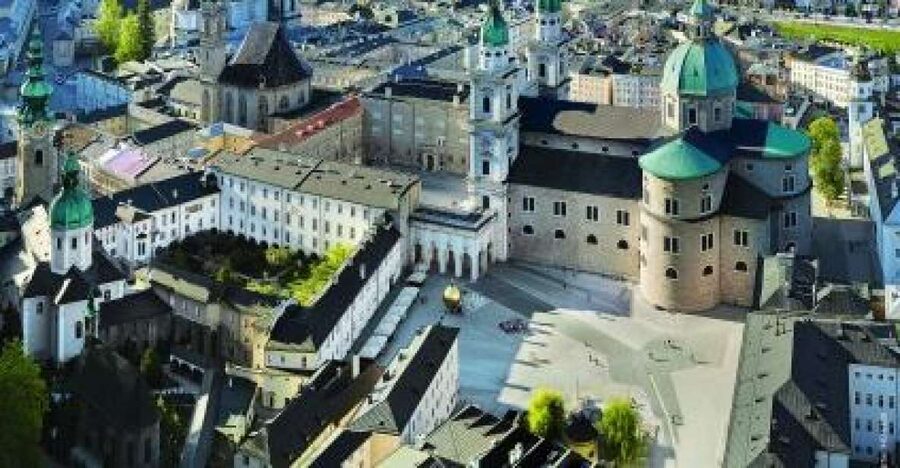
The DomQuartier is built around one big theme: Salzburg’s power was spiritual and political at the same time. The cathedral and the Salzburg Residenz formed the heart of the city, but after the Prince Archbishopric was dissolved in 1803, that unity was lost for roughly 200 years. What you get now is the restored complex opened to the public on 17 May 2014.
The most useful mindset is to treat this like a guided building walk—even though you’re doing it with audio. The complex isn’t just “rooms full of stuff.” It’s also the passages, sightlines, and architectural layers that explain why the Baroque era in Salzburg looked the way it did.
And there’s a name behind the plan: Prince Archbishop Guidobald von Thun. His 14-year reign (1654–1668) shaped Salzburg’s Baroque image. He built key elements you’ll encounter here, including the cathedral arches, the Residenz, cathedral squares, and the art gallery that is now the Long Gallery at St. Peter’s Abbey.
Entering The DomQuartier: Your Route Starts Clear
Your ticket starts at DomQuartier Salzburg and finishes back at the meeting point. That matters because the complex is big enough to feel like a maze if you’re off-track, but the design is set up to keep you moving through the sequence of spaces.
Expect this to feel like a loop of connected highlights rather than a scatter of unrelated rooms. The layout is meant to guide you through the Residenz, onward through cathedral-related spaces, and then into the museum areas that connect back to the abbey side.
Also note the practical rules. You can’t take food or drinks inside, and you’re not allowed flash photography, umbrellas, cameras, or selfie sticks. So yes—your smartphone is basically your one allowed “tool,” and you’ll have to resist the urge to record everything like it’s a concert. That’s actually a nice pressure reduction. You’ll look more.
Salzburg Residenz State Rooms: Where Baroque Power Lives
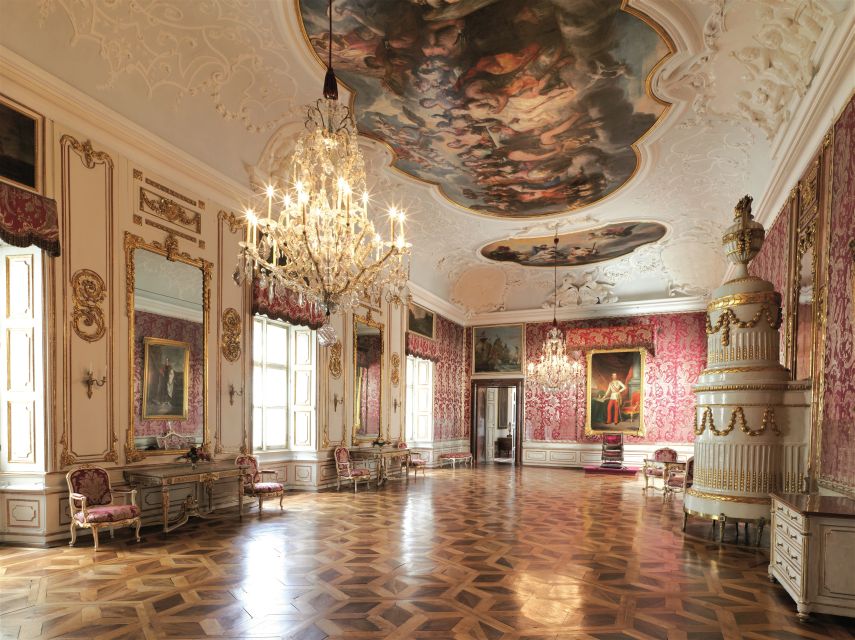
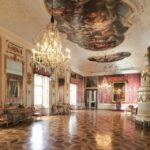
The first big “wow” stop is the State Rooms of the Salzburg Residenz—the prince archbishops’ living quarters and official seat. This is where the mission of the rulers to present themselves shows up in stucco and ceiling frescoes. Even if you’ve seen Baroque rooms elsewhere, these tend to land hard because they’re tied to a specific place in Salzburg’s political map.
What I like here is how the decoration isn’t just pretty. It’s persuasive. The interiors are built to make authority feel permanent, and once you start noticing that, the later galleries and museum pieces feel less random.
If you’re the type who prefers “rooms where something is happening” rather than long corridors, these state rooms are your anchor. They give you the visual language of the complex fast—then the audio guide helps connect it to the broader story.
Residenz Gallery and Baroque-Focused Painting
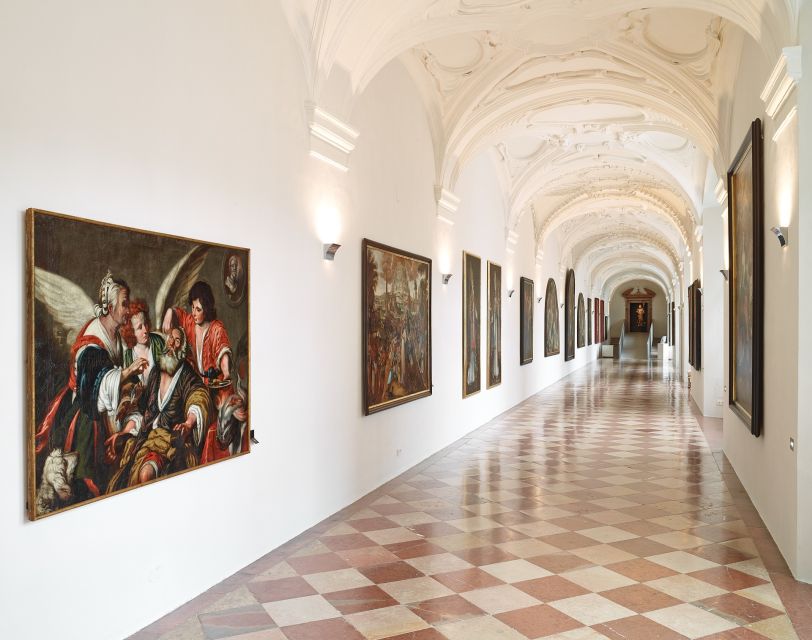
Next comes the Residenz Gallery, where the emphasis is on European paintings from the 16th to the 19th century, with a clear focus on the Baroque period. This is a good change of pace after the theatrical ceilings: painting slows you down.
This is also a practical win. When your feet are tiring, a gallery can feel more controllable than a constant sprint through halls. If you listen to the audio guide while you move, you’ll be able to link the art style to the whole Baroque push that Prince Archbishop Guidobald von Thun helped set in motion.
The gallery works well if you’re interested in how art supported power—religious and secular themes often show up together in court-centered spaces like this.
A few more Salzburg options to size this one up against:

Cathedral Arches Terrace: The Best View Break (When Open)
Then you’ll hit the Cathedral Arches Terrace, one of the best payoffs in the complex. The idea here is that you get a view of Salzburg from a place that literally sits between the cathedral’s sacred center and the secular world around it.
There’s one important practical detail: the terrace is closed during a few exceptional cases, like special events or storm warning. So don’t build your whole day around it without flexibility. If it’s closed, you can still enjoy the rest of the cathedral museum route.
Even when the view isn’t perfect weather-wise, the terrace still functions as a mental reset. You’ll walk from interior Baroque spectacle into city scale, which makes the whole day feel less like you’re stuck in one giant building.
North Oratory and Cathedral Museum: How the Story Expands
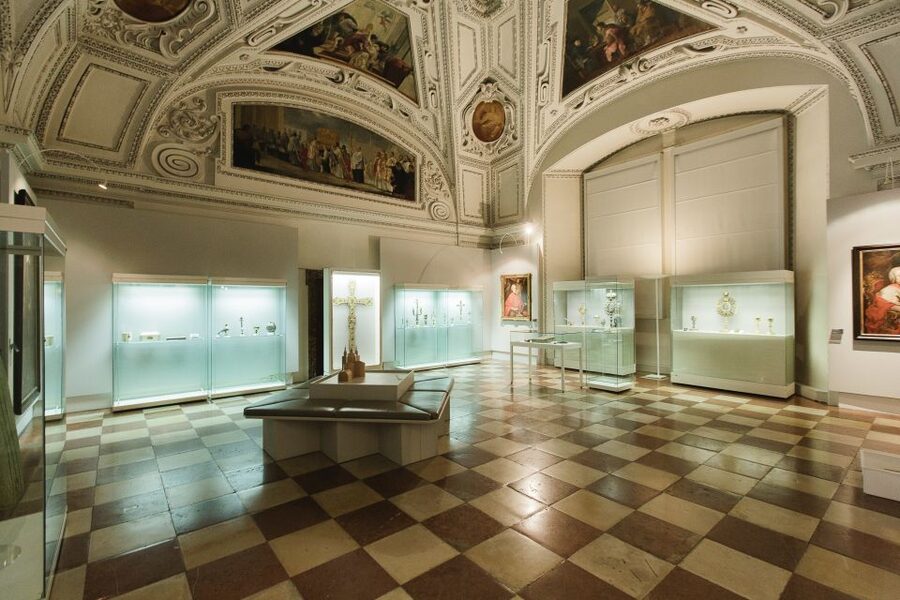
The tour continues into spaces that connect the spiritual and artistic sides of the complex. The North Oratory has a plan for special exhibitions tied to its original structure. For right now, a guest presentation includes the Salzburg Museum with the Rossacher collection.
From there, the route flows toward the Cathedral Museum and related spaces (including the Kunstkammer and the Long Gallery). The organ loft adds a nice transition step, since it gives you a view inside the cathedral space before you shift back into art and artifact-focused rooms.
If you like when architecture and objects talk to each other, this section does that. The collection areas aren’t just “look and move on.” They help explain the scale of what Salzburg valued across centuries.
Long Gallery and the Abbey Side: Museum St. Peter’s Advantage
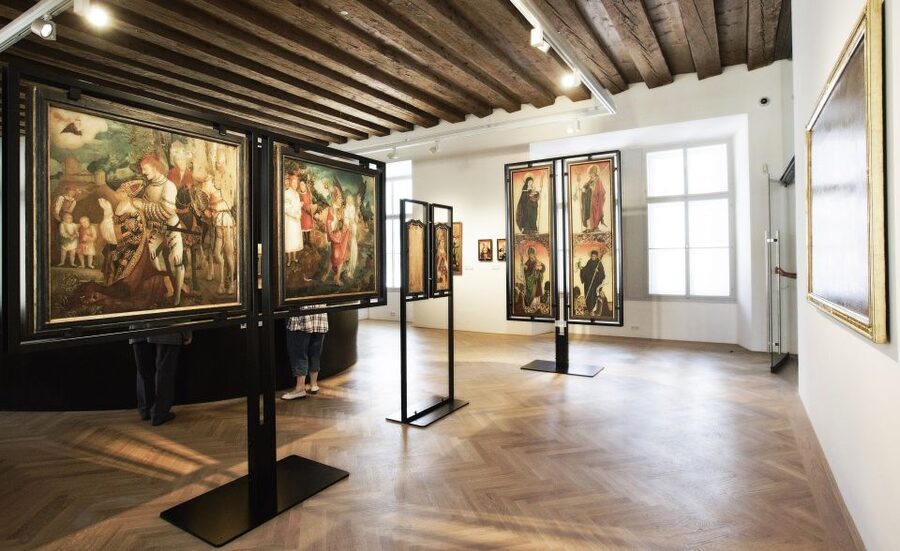
One of the smartest parts of DomQuartier is how it incorporates St. Peter’s Abbey into the museum experience. The abbey is immediately adjacent to the cathedral and Residenz complex and is considered the oldest continuously running monastery in the German-speaking countries.
St. Peter’s isn’t just a name drop. The abbey has an art collection with an estimated 40,000 exhibits. For this DomQuartier experience, Museum St. Peter presents the most beautiful objects for the first time since 1982, in a newly designed permanent museum.
This stop gives you something different than palace rooms and cathedral paintings. It feels more “monastic” and grounded, so the whole day gains contrast. If you’ve been staring at frescoes for hours, Museum St. Peter is a good way to rebalance your brain.
The most useful tip: treat these museum spaces like chapters. Do one section fully, then move on. Don’t try to “collect everything” in one long blur.
Audio Guide on Your Smartphone: The Real Secret to Getting It Right
You get an online audio guide meant for your own smartphone. No special device required—just a phone with an up-to-date web browser and internet connection. The guide lives at: www.domquartier.at/audioguide
I’m a fan of this setup because it changes how you pace. Want to stand longer in a gallery? You can. Want to speed past a room and catch up later? You can. And you can interrupt the tour and resume later the same day.
Language options are wide: German, English, Dutch, Italian, French, Spanish, Russian, Mandarin, Korean, and Japanese. There’s also a specially developed children’s audio guide in German, English, and Italian.
One small heads-up: booklets can be purchased on site, but the audio guide is the main tool here. Also, from 2025, borrowing an audio guide device comes with a fee of €2. If you’re bringing your own phone, you should be fine with the included online option.
Rules That Affect Your Day (Cameras, Bags, Food, and More)
Before you walk in, scan the rules so you don’t waste time near the entrance. You’re not allowed food and drinks, and you can’t bring luggage or large bags. Pets aren’t allowed either (assistance dogs are allowed).
You also can’t use flash photography, cameras, or selfie sticks, and umbrellas are out. This might sound strict, but it’s also why the experience can feel calmer than some big attractions.
The best practical strategy is to travel light. Wear comfortable shoes, keep your day bag minimal, and plan to rely on your phone for the audio guide (and for whatever plain note-taking you want, since cameras are not allowed).
Timing Tip: Don’t Play Closing-Time Roulette
Here’s the one practical warning that matters: give yourself enough buffer near closing. If you arrive too close to the end of the day, entry may be refused. It’s worth showing up with at least a couple of hours left in your planned visiting window.
This complex is big enough that you’ll feel rushed if you try to do everything at the end. If the terrace is open, that view needs a calm moment, not a sprint.
If you only have half a day, you can still get a strong experience—just be selective and stick to the main sequence. The structure is designed so you don’t feel like you’re missing key parts, even if you don’t do every single micro-room.
Price and Value: Why $14 Can Actually Make Sense
At about $14 per person, DomQuartier is priced like a “one-day cultural ticket,” not like a half-day museum add-on. The value comes from the scale: roughly 15,000 square meters and about 2,000 exhibits tied to 1300 years of art and culture.
You’re also getting flexibility baked in. The ticket allows multiple admissions on the same day, and you can interrupt and resume later. That means you can build a day that includes coffee breaks and still come back for the parts you want most.
If you’re comparing it to separate museum admissions, the advantage is the unified story across the complex—residence, cathedral spaces, museum rooms, and the abbey side all connected to the Prince Archbishops.
Who Should Book This Ticket (And Who Might Skip)
This ticket is a great fit if you:
- want a self-guided museum day with strong structure
- like Baroque art, cathedral context, and court-era interiors
- prefer a route where you’re less likely to get mentally lost
- want an indoor option that pairs well with Salzburg sightseeing outside
You might reconsider if you:
- strongly prefer live narration from a guide (this doesn’t include one)
- need lots of time for casual wandering without audio
- dislike rules around cameras or want to film constantly
It’s also ideal for visitors who like the “here’s the building, here’s the story, now look again” approach. DomQuartier is about seeing the same power structures from different angles.
Should You Book the DomQuartier Day Ticket?
Yes, I think you should book it if you want one ticket that covers the heart of Salzburg’s cathedral-and-palace world. The value is real for the amount you can see in a day, and the experience is set up so you don’t spend your time fighting confusion.
Book it especially if you’re traveling during a busy season and you’d rather control your own pace with the audio guide. Also, if you care about Baroque architecture, palace rooms, and cathedral-linked museums, this is one of the most efficient ways to get that whole picture in Salzburg.
If you only have a short visit, plan your timing carefully and aim to arrive with room before closing. Do that, use the audio guide, and you’ll come away with a much clearer sense of how Salzburg’s spiritual and political worlds were built to sit together.
FAQ
What does the DomQuartier Day Ticket include?
It includes the DomQuartier ticket, free Wi-Fi, and access to an audio guide online for use with your own smartphone. It also includes access to the cathedral arches terrace, though the terrace can be closed in exceptional cases.
How long is the ticket valid?
The ticket is valid for 1 day. Starting times depend on availability, so you’ll need to check what times are offered.
Where do I start and where does the visit end?
You start at DomQuartier Salzburg and the activity ends back at the meeting point.
Do I need a live tour guide?
No. This experience does not include a live tour guide. You’ll use the audio guide instead.
Can I pause my visit and come back later the same day?
Yes. The tour can be interrupted at any time and resumed later the same day within your ticket’s validity.
Which languages are available for the audio guide?
The audio guide is available in German, English, Dutch, Italian, French, Spanish, Russian, Mandarin, Korean, and Japanese. A separate children’s audio guide is available in German, English, and Italian.
Do I need to download the audio guide app?
No. You access the audio guide online at www.domquartier.at/audioguide using your smartphone with an up-to-date web browser and internet connection.
Is the cathedral arches terrace always open?
Not always. The terrace is closed in a few exceptional cases, such as special events or storm warnings.
Are there restrictions on what I can bring or do inside?
Yes. Smoking is not allowed. Food and drinks are not allowed. Large bags or luggage, pets (assistance dogs allowed), flash photography, umbrellas, cameras, and selfie sticks are not allowed.
Is DomQuartier wheelchair accessible?
Yes, the experience is wheelchair accessible.
Is there an option to borrow an audio guide device?
From 2025, you can borrow an audio guide for a fee of €2. The included option is using the online audio guide on your own smartphone.
More Tickets in Salzburg
- Salzburg: Hohensalzburg Fortress Admission Ticket
★ 4.6 · 2,236 reviews - Salzburg: The Magic Flute at Marionette Theater Ticket
★ 4.7 · 255 reviews - Salzburg: Cathedral Entry Ticket with Audio Guide Option
★ 4.4 · 134 reviews - Salzburg Cathedral: Guided Tour with Entry Ticket
★ 4.6 · 126 reviews - Salzburg: The Sound of Music at Marionette Theater Ticket
★ 4.9 · 104 reviews
More Tour Reviews in Salzburg
- The Original Sound of Music Tour in Salzburg
★ 4.5 · 6,129 reviews - Salzburg: Original Sound of Music Tour
★ 4.8 · 5,059 reviews - From Salzburg: Half-Day Tour to Hallstatt
★ 4.6 · 3,596 reviews - Salzburg: Mozart Concert at Mirabell Palace
★ 4.8 · 3,498 reviews - Salzburg: Hohensalzburg Fortress Admission Ticket
★ 4.6 · 2,236 reviews
The Cathedral and DomQuartier
- Salzburg: Cathedral Entry Ticket with Audio Guide Option
★ 4.4 · 134 reviews - Salzburg Cathedral: Guided Tour with Entry Ticket
★ 4.6 · 126 reviews - Salzburg Old Town, Fortress, Cathedral Private Walking Tour
★ 4.5 · 41 reviews - Salzburg Old Town, Fortress, Cathedral Private Walking Tour
★ 5.0 · 17 reviews
Fresh from Salzburg: Latest Reviews




Cathedral & DomQuartier, compared.
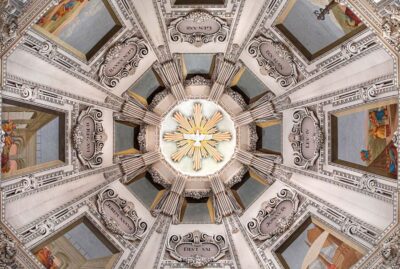 ★ 4.6Salzburg Cathedral: Organ Concert at MiddayFrom $102,007 reviews
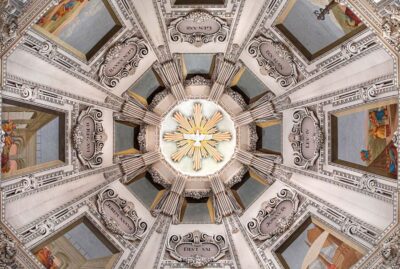 ★ 4.4Cathedral Entry Ticket with Audio Guide OptionFrom $5134 reviews
 ★ 4.6Salzburg Cathedral: Guided Tour with Entry TicketFrom $10126 reviews
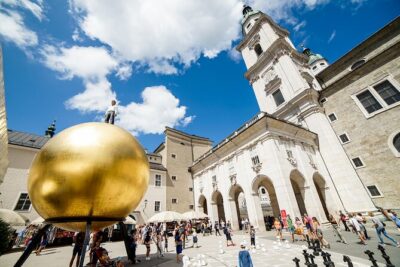 ★ 4.5Salzburg Old Town, Fortress, Cathedral Private Walking TourFrom $19341 reviews
★ 5.0Salzburg Old Town, Fortress, Cathedral Private Walking TourFrom $19717 reviews
★ 4.5Salzburg Old Town, Fortress, Cathedral Private Walking TourFrom $19341 reviews
★ 5.0Salzburg Old Town, Fortress, Cathedral Private Walking TourFrom $19717 reviews
Browse the lists this tour appears in