
Reviewed · COOKING CLASSES & APPLE STRUDEL
Cookies and Apple Strudel Cooking Class Including Lunch
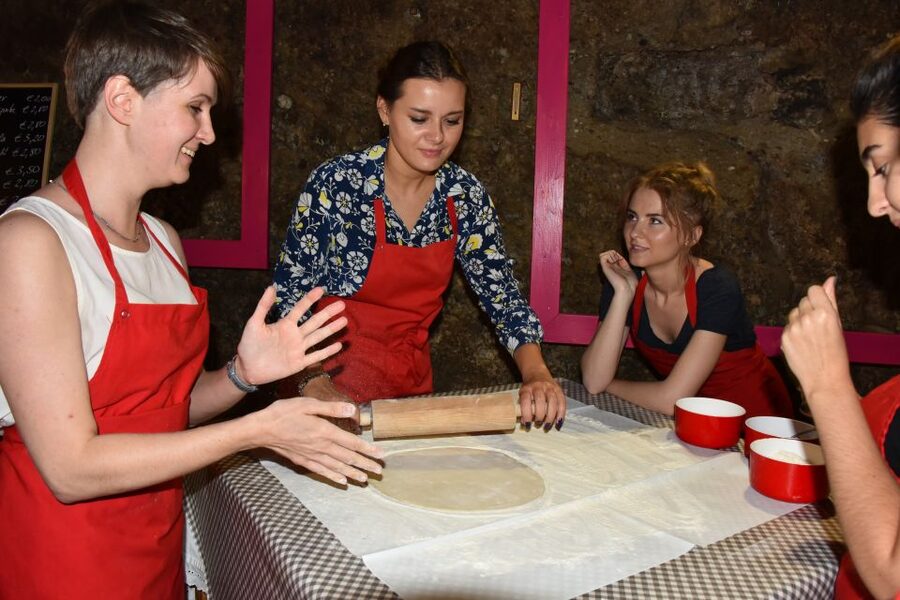
Strudel-making turns Salzburg into your kitchen. In 90 minutes you’ll handle the dough, stretch the pastry, and bake your own apple strudel and vanilla kipferl cookies. It’s also a social lunch stop that fits neatly between sightseeing.
What I like most is the hands-on pace. You’re not just tasting; you’re doing the marinating and learning the pastry moves that make the final strudel work. You’ll also sit down for a comforting bowl of goulash soup before digging into what you baked.
One consideration: the whole experience is tightly timed. If you prefer slow, unhurried cooking, the 90-minute schedule and rapid oven cycle can feel a bit fast.
In This Review
- Key things that make this class worth your time
- Where You’ll Make Apple Strudel in Salzburg’s Rock-Built Kitchen
- The 90-Minute Rhythm: From Apples and Pastry to Oven Work and Cookies
- The Stretching Technique: What Makes Real Apple Strudel Different
- Vanilla Kipferl Cookies While the Strudel Bakes
- Lunch That Actually Feels Like Lunch: Goulash Soup First
- Austrian Cuisine History in Plain Talk (Not Food Trivia)
- Price and Value: What You Get for About $70
- Who This Class Suits Best (And Who Might Want Another Option)
- Should You Book This Apple Strudel and Cookie Class?
- FAQ
- How long is the cooking class?
- How many people are in the class?
- Is the instructor available in English?
- What is included in the price?
- Where is the meeting point?
- Is there free cancellation and a pay later option?
Key things that make this class worth your time
- You actively make the strudel, including apple prep and stretching the pastry
- Small groups (max 15, split into tables of 2–4) so you get real help
- Kipferl cookies while the strudel bakes, so you stay busy the entire 90 minutes
- Goulash soup is included, a warm, satisfying Austrian-style lunch
- Hands-on is the point, not a lecture, so you leave with a skill and treats
- Salzburg meets all over the world, with an easy, relaxed mix of people
Roll more strudel while you are here
- Austrian Apple Strudel Cooking Class including Lunch in Salzburg★ 5.0 · 929 reviews
- Salzburg: Apple Strudel & Salzburger Nockerl Class★ 4.9 · 424 reviews
- Salzburg Christmas Cookies and Apple Strudel Cooking Lesson★ 5.0 · 183 reviews
- Cookies and Apple Strudel Cooking Class Including Lunch★ 4.9 · 156 reviews
Where You’ll Make Apple Strudel in Salzburg’s Rock-Built Kitchen
Your class base is at Ursulinenplatz 9, 5020 Salzburg, a short 10-minute walk from Mirabell Square or Mozart Square. That matters because Salzburg sightseeing is walk-heavy, and you won’t need a complicated commute to get here.
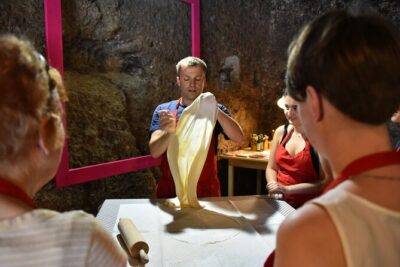
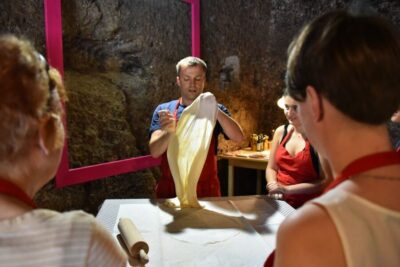
The setting is part of the fun. Several people describe a kitchen that’s built into the rock wall or cliff, which instantly changes the mood. Instead of a generic cooking room, you get a cosy, sheltered space that smells like warm apples and butter long before your food is ready.
You’ll also appreciate that the class is set up to move efficiently. There’s a clear flow: prep stations, small tables, and an instructor who can circulate. If you’ve ever been stuck in a big group where you never quite get your questions answered, this size and layout are a big reason the experience tends to feel easy.
The 90-Minute Rhythm: From Apples and Pastry to Oven Work and Cookies
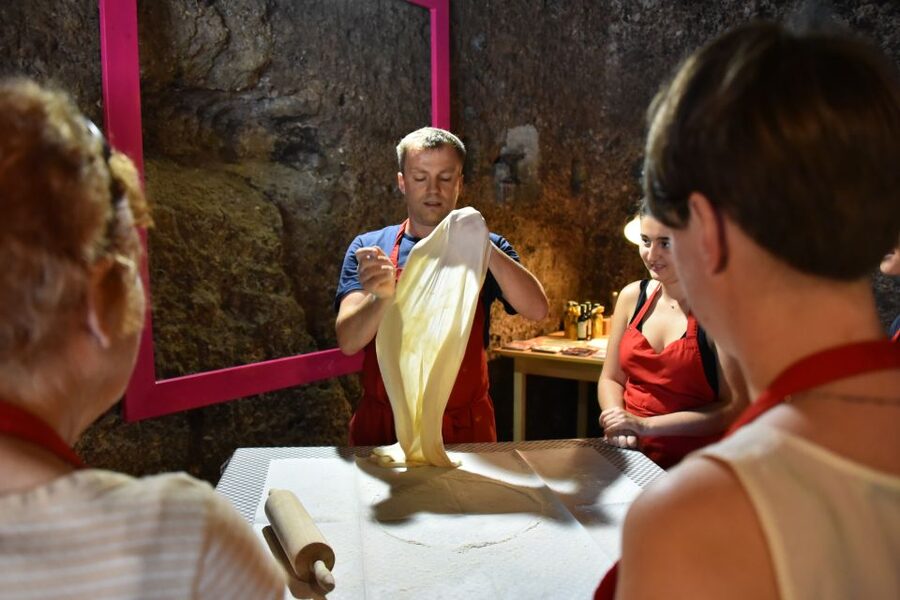
This is a 90-minute class, which is exactly why it works as a lunch plan. You can pair it with a morning tour, or slot it in before afternoon plans without turning your day into a half-day logistics project.
Here’s how the timing tends to feel in practice:
- You start with your own original Austrian apple strudel preparation.
- As the strudel goes into the oven, you switch gears and make cookies (vanilla kipferl).
- You enjoy goulash soup as a warm break, then finish by tasting what you baked.
Small groups help keep this from feeling chaotic. With a maximum of 15 people and tables of 2 to 4, it’s set up for the instructor to show technique and then help while you work. People also note that the instructor support can be very personal in these smaller table groups, and that you can learn at your pace without holding up everyone else.
The overall message is simple: you’ll be busy the whole time. If your idea of travel fun includes rolling up your sleeves and making something real, this format fits.
The Stretching Technique: What Makes Real Apple Strudel Different
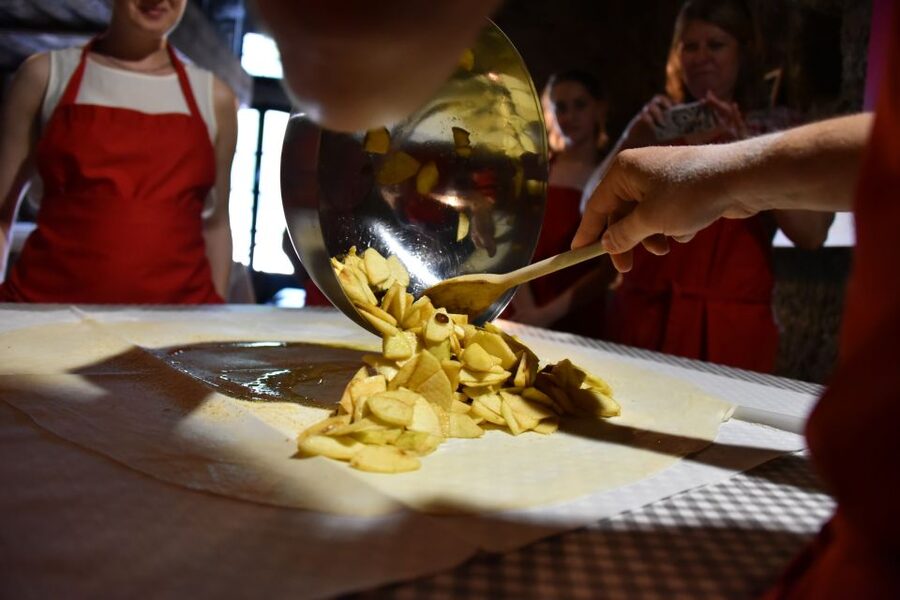
Apple strudel sounds straightforward until you try to stretch pastry thin enough to bake into that delicate, crisp shell. That’s the heart of the class, and it’s also where beginners tend to get the most satisfaction.
You’ll be asked to fully take part in the stages, including prep steps like marinating the apples and learning how to stretch the pastry. Those are not “optional” steps here. The class is built around you doing the key actions, even if you’re not a regular baker.
What I think is most valuable is the feedback you get while you work. The strudel method isn’t magic; it’s technique. And one practical tip that shows up clearly in how people talk about the class: the tricky part isn’t only getting it thin—it’s getting the right texture at the end. For example, someone points out that keeping the flour component crisp is a challenge you can improve with the right approach and attention.
If you want a takeaway you can use later at home, this is it. You’re learning what to watch for in the pastry and filling, not just following a recipe.
Also, note the social side: pastry work gets a little messy and a little funny, and that usually loosens the whole room. At table scale, you end up chatting with the people beside you while you wait for the next step.
Vanilla Kipferl Cookies While the Strudel Bakes
While your strudel is in the oven, you don’t just sit and wait. You make cookies—vanilla kipferl, described as the most popular cookie in Salzburg.
This is smart class design. It keeps you from getting bored mid-bake and lets you practice another Austrian skill: shaping. Cookie forming is perfect for hands-on learning because mistakes don’t feel like a disaster. You can adjust as you go, and the payoff is quick.
And you get that additional “I made this” moment. People often love that part of the experience: tasting is great, but the real joy is seeing how your hands can go from ingredients to something that looks like the real thing on a plate.
One more plus: you end up with a variety of results. Strudel is a bigger centerpiece. Kipferl cookies are bite-sized and shareable. Together, they make the class feel like a true Austrian food spread instead of a single-dish demo.
A few more Salzburg options to size this one up against:

Lunch That Actually Feels Like Lunch: Goulash Soup First
You get lunch included, and it’s not an afterthought. The class serves a tasty goulash soup before you eat your own baked creations.
This order helps. Soup keeps your energy steady while you’re waiting on the oven, and it gives you something warm and filling if you’re coming in on a cold day or right after walking around the old town. It also balances the sweetness that’s about to come out of the oven.
A practical tip for your planning: because drinks aren’t included, decide what you want to pair with the meal ahead of time. Some people mention that you may find reasonably priced beer, wine, and schnapps available on-site, but the class itself doesn’t bundle drinks for you—so bring cash/card expectations accordingly.
If your travel day tends to be all tours and no comfort food, this lunch break is one of the strongest reasons to choose this class over a purely sightseeing stop.
Austrian Cuisine History in Plain Talk (Not Food Trivia)
The class also includes insights into Austrian cuisine and its history. You don’t get it as a dry lecture. The information is tied to what you’re making—why strudel matters, why kipferl is remembered, and what local technique looks like in real kitchens.
Why that matters: it turns the food from just a snack into context. When you understand the cultural logic behind a pastry—simple ingredients, careful technique, sharing—it makes the result feel more meaningful, even if you’re just visiting for a short time.
You’ll also notice the class is designed for an international crowd. People come from all over, and the atmosphere tends to stay relaxed and fun. That’s important in cooking classes because comfort affects learning. When the room feels friendly, you’re more likely to ask questions and actually improve your technique.
Instructors often get named in a positive way, including people like Ishmael, Alina, Agnes, Johann, and Simone. The thread there is clear: clear instruction and a calm vibe are treated as part of the cooking, not extra.
Price and Value: What You Get for About $70
At around $70 per person, you’re paying for three things at once:
- Hands-on instruction in English, with an experienced chef guiding your table work
- Ingredients and baking time for apple strudel plus vanilla kipferl cookies
- A full included lunch (goulash soup), not just a tasting
You’re also getting the efficiency of a short class. Ninety minutes is long enough to learn and produce, but short enough to avoid turning into an expensive half-day you don’t have time for.
Where the value can dip for some people is drinks. Since drinks aren’t included, your final meal cost depends on how much you add on. If you prefer just water or plan to buy something small, you’ll keep costs predictable.
Overall, if you enjoy cooking, eating well, and learning a skill you can repeat, this price tends to make sense—especially compared with “watch and taste” experiences that don’t leave you with real technique.
Who This Class Suits Best (And Who Might Want Another Option)
This class is a great fit if:
- you want a hands-on Austrian experience, not a seated lecture
- you like short, focused activities that still produce real food
- you’re traveling as a couple or alone and want an easy social table experience
- you’d enjoy taking some baked goods with you (many people mention they leave with extra)
It may be less ideal if:
- you’re very time-tight and hate anything that feels scheduled minute-to-minute
- you dislike cooking tasks like stretching dough or shaping cookies
- you have strict dietary needs that aren’t listed here—because you’d need ingredient details to confirm fit
If you’re booking around a Christmas market day, it also works well because it’s close to central landmarks. That means you can enjoy markets afterward without getting stuck in long travel gaps.
Should You Book This Apple Strudel and Cookie Class?
If you want a real taste of Salzburg that involves your hands, not just your camera, I’d book this. The combination is strong: apple strudel that you actively make, vanilla kipferl you shape yourself, and an included goulash soup lunch that keeps the whole thing feeling like a proper meal.
Choose it especially if you:
- want something authentically Austrian but not intimidating
- like small-group instruction with tables of 2 to 4
- prefer experiences you can actually carry home, whether that’s extra strudel or the technique you learn
Pass on it if you’re expecting a slow, leisurely cooking day or if you need detailed dietary ingredient guarantees. With a 90-minute schedule, you’re there to work—and it rewards people who are ready to jump in.
FAQ
How long is the cooking class?
The class lasts 90 minutes.
How many people are in the class?
The class has a maximum of 15 people and is split into tables of 2 to 4.
Is the instructor available in English?
Yes, the instructor works in English.
What is included in the price?
All taxes, fees, and handling charges are included, along with lunch. Drinks are not included.
Where is the meeting point?
You meet at Ursulinenplatz 9, 5020 Salzburg, about a 10-minute walk from Mirabell Square or Mozart Square.
Is there free cancellation and a pay later option?
Yes. You can cancel up to 24 hours in advance for a full refund. You can also reserve now and pay later.
More Lunch Experiences in Salzburg
- Austrian Apple Strudel Cooking Class including Lunch in Salzburg
★ 5.0 · 929 reviews - Salzburg: Canyoning and Rafting Experience with Lunch
★ 4.6 · 18 reviews
More Tour Reviews in Salzburg
- The Original Sound of Music Tour in Salzburg
★ 4.5 · 6,129 reviews - Salzburg: Original Sound of Music Tour
★ 4.8 · 5,059 reviews - From Salzburg: Half-Day Tour to Hallstatt
★ 4.6 · 3,596 reviews - Salzburg: Mozart Concert at Mirabell Palace
★ 4.8 · 3,498 reviews - Salzburg: Hohensalzburg Fortress Admission Ticket
★ 4.6 · 2,236 reviews
Strudel, Nockerl and the Kitchen
- Austrian Apple Strudel Cooking Class including Lunch in Salzburg
★ 5.0 · 929 reviews - Salzburg: Apple Strudel & Salzburger Nockerl Class
★ 4.9 · 424 reviews - Salzburg Christmas Cookies and Apple Strudel Cooking Lesson
★ 5.0 · 183 reviews - Apple Strudel & Prezel Cooking Class incl. Dinner & Music
★ 5.0 · 113 reviews - Salzburg: Dinner Cooking Class and Music
★ 4.9 · 48 reviews
Fresh from Salzburg: Latest Reviews



Cooking Classes & Apple Strudel, compared.
 ★ 5.0Austrian Apple Strudel Cooking Class including Lunch in SalzburgFrom $72929 reviews
 ★ 4.9Apple Strudel & Salzburger Nockerl ClassFrom $70424 reviews
 ★ 5.0Salzburg Christmas Cookies and Apple Strudel Cooking LessonFrom $72183 reviews
 ★ 5.0Apple Strudel & Prezel Cooking Class incl. Dinner & MusicFrom $95113 reviews
 ★ 4.9Dinner Cooking Class and MusicFrom $10048 reviews
 ★ 4.8Original Sound of Music Tour & Edelweiss Cooking ClassFrom $17015 reviews
Browse the lists this tour appears in