
Reviewed · SALZBURG OLD TOWN WALKING TOURS
Salzburg Introduction Private Walking Tour
Salzburg feels like a living music box. This private walking tour threads Old Town lanes to Mozart’s childhood spots, St. Peter’s Abbey, and Mirabell Gardens, with stories that explain Salzburg’s links to the Sound of Music.
I like two things right away. First, the tour’s focus on exact places makes the Mozart content feel grounded, not vague. Second, the best guides on this route keep the mood up—one guide named Liza was praised for finding sunnier spots during brutal cold and staying upbeat.
One possible drawback: the experience really depends on the guide’s clarity and flow. A past guest said it felt a bit muddled and could have been done on their own. If you want a tight, fact-heavy route, you should ask your guide to emphasize the themes you care about most.
In This Review
- Key highlights worth your attention
- Meeting at Café Glockenspiel: where the Old Town rhythm starts
- Getreidegasse: Mozart’s street and Salzburg’s medieval-commercial heart
- Mozart’s birthplace and residence: turning addresses into understanding
- St. Peter’s Abbey (Erzabtei Stift St. Peter): history you can feel in your legs
- Sound of Music clues, plus the Salzburg stories behind the songs
- Schloss Mirabell and Mirabellgarten: where the Baroque really shows off
- Price and value: what you’re paying for with a private scholar guide
- Who should book this walking tour, and who might want to skip it
- Should you book this Salzburg introduction walk?
- FAQ
- How long is the Salzburg introduction private walking tour?
- Where do we meet, and does pickup happen?
- Is the tour private?
- Is it offered in English?
- What are the main stops?
- Is Mozart Residence admission included?
- Is free cancellation available?
Key highlights worth your attention
- Meet at Café Glockenspiel (Linzer G. 39) and start right in the Old Town action
- Getreidegasse on foot with the medieval-and-Baroque look that made Salzburg feel like itself
- Mozart’s birthplace at No. 9 Getreidegasse with context for his family life there
- St. Peter’s Abbey since 696 for a rare sense of continuity in a modern European city
- Mirabell Palace and Mirabellgarten for classic Baroque geometry and photo-friendly stops
- Private group up to 10 so you can ask questions and control pacing
The old town lanes on foot, a few more routes
- Salzburg 2.5-Hour Walking Tour: Mozart, Old Town & More★ 4.2 · 987 reviews
- Salzburg: Old Town, Mozart, & Mirabell Gardens Walking Tour★ 4.8 · 461 reviews
- Salzburg Oldtown: Sightseeing Walking Tour with Licensed Local Guide★ 5.0 · 392 reviews
- Salzburg Old Town Walking Tour, Mozart, Mirabell Gardens★ 4.5 · 201 reviews
Meeting at Café Glockenspiel: where the Old Town rhythm starts

Your guide meets you near Café Glockenspiel in the Linzergasse area (Linzer G. 39), right where Salzburg’s pedestrian flow is at its best. Start time is 2:00 pm, and the tour runs about 2.5 hours (roughly 2 to 3, depending on pace and how long you linger at key stops).
If you’re not using pickup, plan to arrive 15 minutes early so you don’t feel rushed. That small buffer matters here because the Old Town streets can twist fast—your best advantage is just getting your bearings early, not trying to navigate while half a dozen landmarks appear at once.
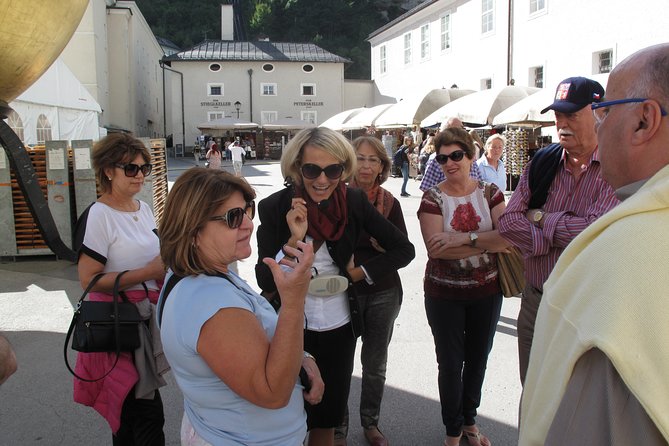
The tour is private for your group (up to 10 people), led by local historians. That’s a big deal in Salzburg. This city is famous for Mozart and also for the kind of layered architecture that makes self-guided walking feel like a scavenger hunt. With a guide, the “why” comes with the “where.” You’ll also get a mobile ticket, which is useful for the spots where entry timing or ticketing matters.
Getreidegasse: Mozart’s street and Salzburg’s medieval-commercial heart
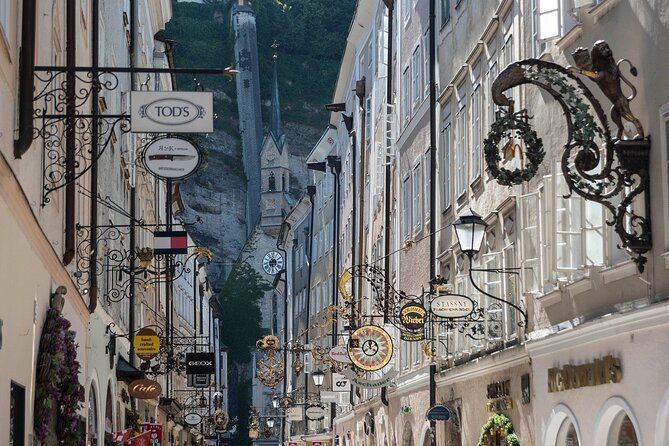
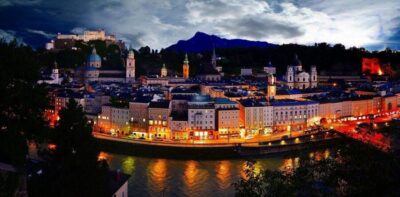
One of the first things you’ll notice on this route is how the city seems designed for slow looking. Salzburg’s Old Town lanes zigzag and narrow, and you’ll pass wealthy burgher houses with Baroque facades that sit right over older medieval bones. It’s the kind of contrast you can’t fully capture in photos. Being on foot helps you read the details: doorways, building lines, and the way the street funnels your attention toward the next corner.
Your guide starts in Getreidegasse, the well-known shopping district that still carries that medieval-and-Baroque character. Practically, this is the part of the tour where you’ll get oriented: where the commercial center fits into the larger Old Town, and how Salzburg’s rulers (especially the archbishops, in the wider area you’ll later see) shaped the city’s look and mood.
A plus here is that Getreidegasse isn’t just “pretty streets.” It’s also the stage for Mozart’s story. The tour sets you up to understand why Mozart is tied so closely to this specific neighborhood.
The only caution: if you come in expecting big, obvious monuments at every step, Getreidegasse can feel more like an atmospheric walk. That’s not a problem if you like architecture and context—but it is something to know.
Mozart’s birthplace and residence: turning addresses into understanding
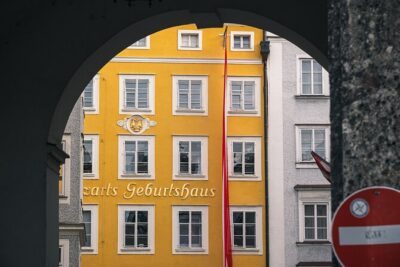
Mozart’s story on this tour is practical and location-based. You go to Mozart’s Birthplace at No. 9 Getreidegasse, where the Mozart family lived on the third floor from 1747 to 1773. That matters because it keeps the conversation anchored in a time window rather than a single museum-style moment.
From there, the tour continues to Mozart’s Residence, tied to how he lived until age 17. You’ll also have time with an exhibit that connects his musical genius to the dramatic arc of his life, guided by your local expert.
Here’s the big value: the tour connects Mozart to Salzburg itself—his childhood world, his family setting, and the local culture that shaped opportunities for classical music. If you’ve ever felt that Mozart tours can become either too theatrical or too academic, this format usually lands in the middle: you get both place and story, and your guide can adjust based on what you ask.
Important detail for planning: Mozart Residence admission is not included. So bring patience for that step. You’ll still get the walking and the guide-led interpretation, but you may need to buy or handle entry for the museum/residence portion separately.
One more tip: if you care about Mozart the composer rather than just the legend, ask your guide to point out what Salzburg did to support that creative life—then watch how the city details start making more sense.
St. Peter’s Abbey (Erzabtei Stift St. Peter): history you can feel in your legs
Next comes one of Salzburg’s most meaningful stops: St. Peter’s Abbey (Stift St. Peter). It’s a Benedictine monastery and former cathedral, and the tour emphasizes its age—founded in 696, it’s described as one of the oldest monasteries in the German-speaking world.
What’s great here is that this isn’t just “another pretty church stop.” Your guide frames the abbey within Salzburg’s larger story: why institutions like this mattered, and how religious centers influenced learning, culture, and daily life over centuries. Even if you only take in the basics, the guide helps you see the abbey as a long-running thread rather than a single stop on a checklist.
The time on this segment is about 25 minutes, with free admission listed for this stop. That makes it a realistic detour without turning the day into a museum marathon.
Possible drawback: if you want a lot of free-form wandering inside the abbey’s spaces, the guided structure can feel tight. The upside is you won’t miss the key context, and you’ll still move efficiently through the Old Town.
Your group only, at your own pace

Sound of Music clues, plus the Salzburg stories behind the songs
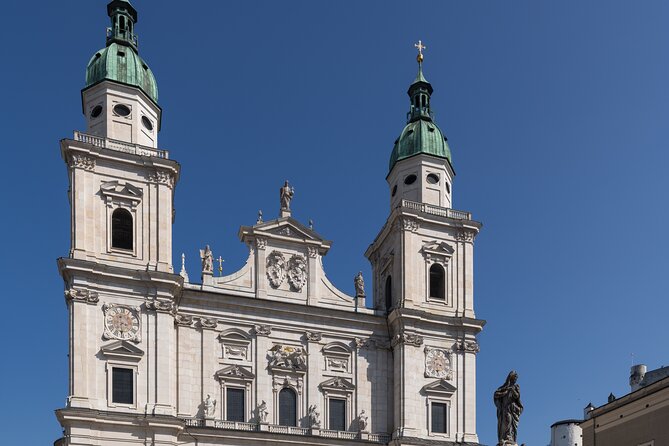
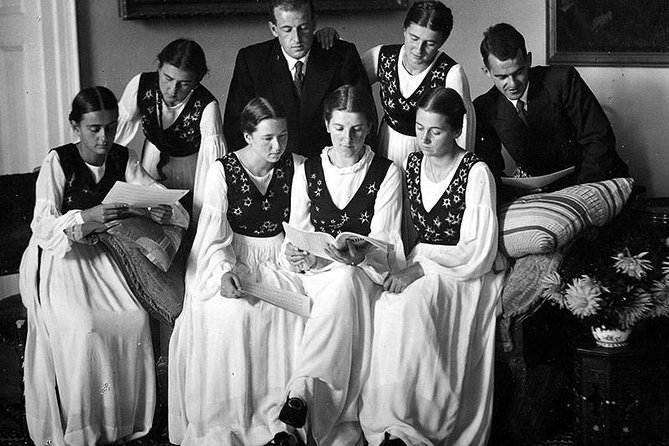
Even though this tour is centered on architecture and key Mozart sites, the guide doesn’t leave you stuck in 18th-century Austria. Salzburg’s later pop-culture identity shows up through the Sound of Music connection—specifically, that the city provided filming locations for the story.
But the best part is how those references sit inside broader Salzburg themes, including the city’s past salt trade and advances in medicine. Those details are useful because they explain why Salzburg wasn’t just a stage for composers. It was a working city with trade networks, industries, and practical knowledge.
When a guide ties these strands together, your mental picture shifts. The baroque facades stop being just decoration. They look like the skyline of a city that had money, influence, and ambitions—some spiritual, some political, some very practical.
One thing to consider: if you’re a hardcore Sound of Music fan expecting lots of on-screen specifics, your focus may depend on how your guide handles the pop-culture references. In a strong guided format, you’ll still get the main connections, but the deeper satisfaction comes when the guide matches your interests. A quick question at the start can help a lot.
Schloss Mirabell and Mirabellgarten: where the Baroque really shows off
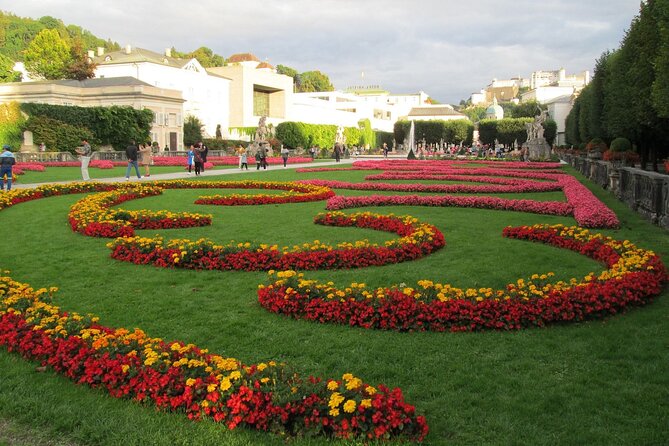
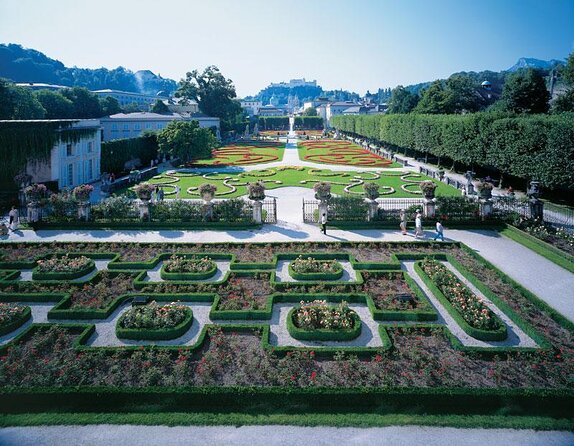
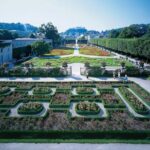
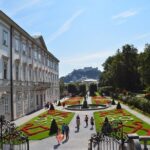
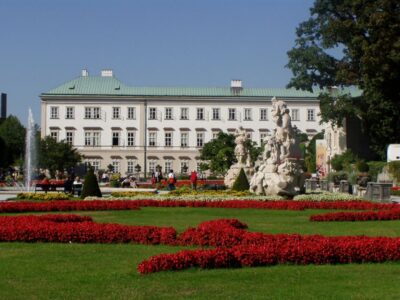
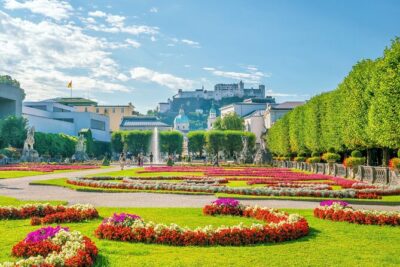
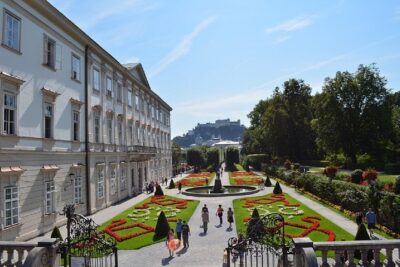
After Mozart and the abbey, the tour lands in the Residenz District area for a Mirabell break. Expect grand Italian-influenced Baroque squares, plus Mirabell Palace and Mirabellgarten with mythological statues and ornate flower arrangements.
This is a great segment for two reasons. One, it gives your feet a change of pace from the narrow lanes. Two, it’s where you can see Salzburg’s Baroque style in a more open, planned layout, which makes photos easier and less “turn your head fast” stressful.
Time here is about 30 minutes, and free admission is listed for the stop. That combination makes it a smart capstone before you head out. By the time you reach this area, you’ve already built context with Mozart’s sites and the abbey. Mirabell becomes more than a view—it becomes a visual summary of Salzburg’s style and ambition.
If you’re sensitive to cold (or rain), this is also where you’ll want to be strategic. You may stand for photos or pause for explanations, so having a warm layer and some water-resistant footwear helps.
Price and value: what you’re paying for with a private scholar guide
At $565.93 per group (up to 10 people), this is not a bargain-basement walk. It’s also not in “luxury car tour” territory. The value is in the guide time plus the interpretation depth. You’re paying for someone who can connect streets, buildings, and specific Mozart locations into a coherent story.
In Salzburg, that kind of guidance can save you from two common problems:
- spending extra time trying to figure out what you’re actually looking at
- missing the meaning behind the architecture and the Mozart references
You also get professional scholar guidance, a setup that’s designed for more than just surface-level commentary. That shows up in how smoothly the tour moves from Getreidegasse into Mozart’s birthplace and residence, then into St. Peter’s Abbey, and finally into Mirabell Palace.
One more value point: the tour is private, so you’re not stuck with a pace set by strangers who are either sprinting or lingering. If your group includes kids, older folks, or anyone who needs slower stops for photos or warmth, private pacing tends to pay off.
The main “cost” risk is psychological: if you’re expecting every minute to feel like a major attraction, you might judge the tour as too small or too explanatory. That matches the type of negative feedback you’ll sometimes see—when the guide doesn’t land a crisp flow, it can feel like you could have done some of it alone.
Who should book this walking tour, and who might want to skip it
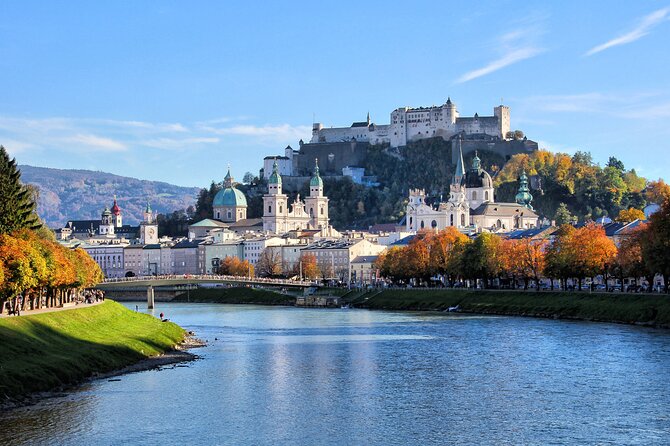
This tour is ideal if you want a focused Salzburg experience that’s heavy on Mozart context, Salzburg Old Town atmosphere, and a serious stop at St. Peter’s Abbey. It’s also a good fit if your group enjoys history explanations that connect to real places, not just dates on a sign.
You’ll likely enjoy it most if you:
- want a structured walking route with a local historian
- care about Mozart but also want the broader Salzburg backdrop (salt trade, medicine, Sound of Music links)
- prefer a private format where you can ask questions
You might want to choose something else if you want long museum time. The Mozart Residence portion is tied to an exhibit, but admission isn’t included, and the walking route keeps the schedule relatively tight. Also, if your group is happiest when they roam freely without stops or guided pacing, a private guided tour may feel like less freedom than you want.
If you do book, take control early: tell your guide what you care about most, like Mozart first, Sound of Music second, and architecture third. It helps ensure the guide’s emphasis matches your expectations.
Should you book this Salzburg introduction walk?
I think it’s a smart choice when you want a tidy, high-impact Salzburg loop that mixes the big names with the city’s real textures. The combination of Getreidegasse, Mozart’s specific addresses, St. Peter’s Abbey’s deep roots, and Mirabell’s Baroque grandeur gives you a complete “Salzburg feeling” without spreading your day too thin.
Book it if you’re traveling with people who will appreciate guided interpretation and specific location context, and if you’re okay handling Mozart Residence admission separately. Consider skipping or supplementing if your top priority is independent wandering with no structure, or if you want a long sit-down museum day.
If you do book, bring warm layers and plan to pause for stops where your guide will likely suggest the most comfortable spots to watch the light and take photos. A good guide can turn a cold walk into a fun one, and the strongest version of this tour is exactly that.
FAQ
How long is the Salzburg introduction private walking tour?
It runs for about 2 hours 30 minutes.
Where do we meet, and does pickup happen?
You meet 15 minutes before the start time unless hotel pickup has been arranged. The default meeting point is Coffeehouse Salzburg at Linzergasse 39 (Linzer G. 39). Pickup is offered.
Is the tour private?
Yes. It’s private, and only your group participates. The group size can be up to 10.
Is it offered in English?
Yes, the tour is offered in English.
What are the main stops?
You’ll see Getreidegasse, St. Peter’s Abbey, Mozart’s Birthplace in Getreidegasse, Mozart’s Residence with an exhibit, and Schloss Mirabell and Mirabellgarten.
Is Mozart Residence admission included?
No. Mozart Residence admission is not included.
Is free cancellation available?
Yes. You can cancel for a full refund if you cancel at least 24 hours before the experience’s start time.
Yours Alone: More Private Salzburg Days
- Original Sound of Music Private Tour Salzburg
★ 4.5 · 310 reviews - Salzburg Old Town Highlights Private Walking Tour
★ 4.5 · 78 reviews - Private Full-Day Tour of Hallstatt and Salzkammergut from Salzburg with Options
★ 5.0 · 77 reviews - Private Tour: Eagle’s Nest and Bavarian Alps Tour from Salzburg
★ 5.0 · 73 reviews - From Salzburg: Private Tour of Hallstatt
★ 4.9 · 56 reviews
More Tour Reviews in Salzburg
- The Original Sound of Music Tour in Salzburg
★ 4.5 · 6,129 reviews - Salzburg: Original Sound of Music Tour
★ 4.8 · 5,059 reviews - From Salzburg: Half-Day Tour to Hallstatt
★ 4.6 · 3,596 reviews - Salzburg: Mozart Concert at Mirabell Palace
★ 4.8 · 3,498 reviews - Salzburg: Hohensalzburg Fortress Admission Ticket
★ 4.6 · 2,236 reviews
The Old Town on Foot, Continued
- Salzburg 2.5-Hour Walking Tour: Mozart, Old Town & More
★ 4.2 · 987 reviews - Salzburg: Old Town, Mozart, & Mirabell Gardens Walking Tour
★ 4.8 · 461 reviews - Salzburg Oldtown: Sightseeing Walking Tour with Licensed Local Guide
★ 5.0 · 392 reviews - Salzburg Old Town Walking Tour, Mozart, Mirabell Gardens
★ 4.5 · 201 reviews - Salzburg Old Town Highlights Private Walking Tour
★ 4.5 · 78 reviews
Fresh from Salzburg: Latest Reviews


Salzburg Old Town Walking Tours, compared.
 ★ 4.2Salzburg 2.5-Hour Walking Tour: Mozart, Old Town & MoreFrom $53987 reviews
 ★ 4.8Old Town, Mozart, & Mirabell Gardens Walking TourFrom $45461 reviews
 ★ 5.0Salzburg Oldtown: Sightseeing Walking Tour with Licensed Local GuideFrom $10392 reviews
 ★ 4.5Salzburg Old Town Walking Tour, Mozart, Mirabell GardensFrom $39201 reviews
 ★ 5.0Hallstatt: 2-Hour Guided Walking Tour with PhotographerFrom $100152 reviews
 ★ 4.5Salzburg Old Town Highlights Private Walking TourFrom $19878 reviews
 ★ 4.6Salzburg Private Walking TourFrom $28948 reviews
 ★ 5.0Private Walking Tour of SalzburgFrom $26342 reviews
Browse the lists this tour appears in