

Reviewed · ESCAPE GAMES & SELF-GUIDED TRAILS
3D Salzburg: Unique VR-Tour
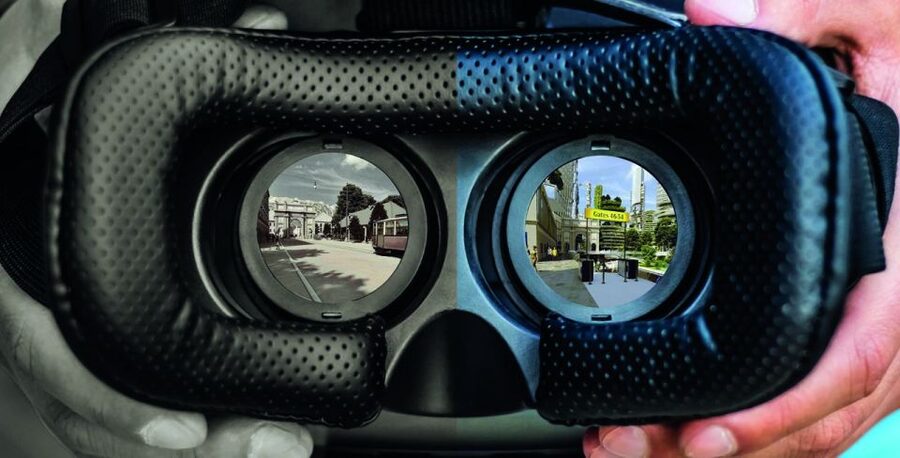
Salzburg through VR sounds gimmicky until you realize it is pointed at real places. This 3D Salzburg history tour uses VR glasses plus a live guide to show how the city looked in different eras, from palace square scenes to wartime streets.
What I like is the blend: you’re not just staring at screens. The tour pairs real Salzburg locations (Mirabellplatz and the old-town squares) with guided context, and it’s delivered in a way that keeps moving—stops, stories, then the VR “time jump.”
One potential drawback to weigh: the experience is built around a set of 3D visuals shown through the TimeTour setup. If you expect a constant, full-environment VR simulation at every second, some parts may feel more like a small set of scenes than a deep, step-by-step living world—and you’ll need your smartphone to make it work.
In This Review
- Key things to know before you go
- Getting Oriented at Mirabellplatz and TimeTour Setup
- A 90-Minute VR History Route Through Salzburg’s Most Mentioned Corners
- Mirabell Palace and Square: Salzburg’s Stage Set in 3D
- Markart Square’s Old Wood Market (About 120 Years Ago)
- Pfeifergasse in World War II Mode
- The Live Guide: What Sabine Rath Adds to the 3D Scenes
- Price and Value: $32 for VR Glasses, TimeTour, and a Guided Walk
- Practical Tips So the VR Experience Doesn’t Feel Like a Tech Problem
- Who Should Book This Tour (and Who Might Prefer Something Else)
- Should You Book the 3D Salzburg VR Tour?
- FAQ
- Where does the tour start?
- How long is the 3D Salzburg VR tour?
- What does the tour cost?
- What language is the live guide?
- Do I need a smartphone?
- Are VR glasses provided?
- Is food included?
- Are entrance fees included?
- Is the tour wheelchair accessible?
- Is the tour suitable for young children?
- Do I need to do anything before I arrive?
Key things to know before you go

- TimeTour app + your charged smartphone are required for the VR experience
- Mirabellplatz 5 meeting point in front of St. Andrä Church, with a quick setup at the start
- Mirabell Palace and Square are part of the core route through the VR epochs
- Markart Square wood market, about 120 years ago gives the tour a lived-in feel
- Pfeifergasse during WWII is the most dramatic visual stop
- Guide-led storytelling from Sabine Rath (German) strongly shapes the value of the trip
Puzzle your own way across the city
- Salzburg: Cathedral Entry Ticket with Audio Guide Option★ 4.4 · 134 reviews
- Escape game in Salzburg★ 4.5 · 23 reviews
- Kickbike Tour – discovering the city in a fun and active way★ 5.0 · 21 reviews
- Salzburg Sound of Music Quest: Self-Guided Escape Game★ 3.5 · 10 reviews
Getting Oriented at Mirabellplatz and TimeTour Setup
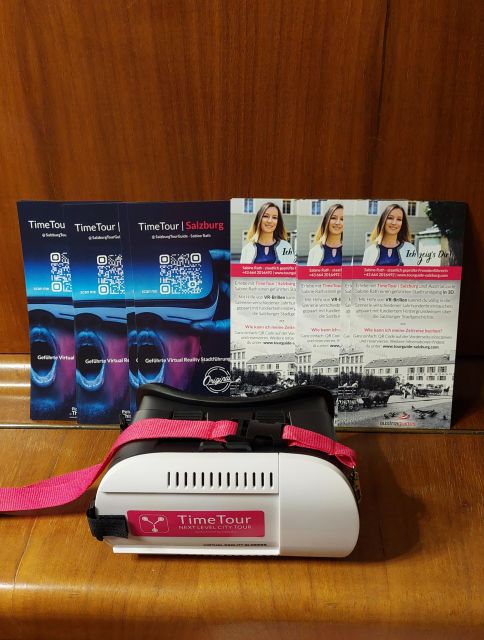
Start at Mirabellplatz 5 (5020 Salzburg), meeting in front of St. Andrä Church. Plan to arrive about 5 minutes early. That buffer matters because the tour begins with handoff: you get access details and you get the VR glasses, but you still have to do your part on the phone.
Here’s the practical heart of the experience: you need your own smartphone and you must download the TimeTour app before the tour starts. When you arrive, you’ll receive the password and the VR glasses. That means your battery should be charged, and your app should be ready to open without hunting for settings mid-tour.
The tour is guided live, and the guide’s language is German. If your German is basic or shaky, you can still follow the visuals, but the stories will land best when you can catch the details.
Timing is also straightforward: the tour runs about 90 minutes (roughly 1.5 hours). That is long enough to see multiple eras, but short enough that you should go in expecting an overview rather than a full-blown lecture.
A 90-Minute VR History Route Through Salzburg’s Most Mentioned Corners
This isn’t a museum visit where you wander at your own pace. It’s closer to a guided walk that uses VR glasses as the storytelling engine. You move through Salzburg, then the VR system shifts you into different historical moments with realistic 3D scenes.
From what’s offered, you’ll hit key visual anchors that Salzburg visitors already recognize:
- Mirabell Palace and Square
- Markart Square
- Pfeifergasse (where the tour places a World War II scene)
That matters because the goal is not abstract history. The goal is place-based history: you see a square, you get the visual time shift, and you hear what you’re looking at and why it matters.
A balanced expectation check: the experience is VR + narration, not VR + unlimited freedom. You’re guided to specific viewpoints where the VR content is triggered. That can be excellent when the scenes are strong and the guide’s explanations are clear. It can feel thin when the visuals are limited or when you personally want more detail on architecture and daily life.
Mirabell Palace and Square: Salzburg’s Stage Set in 3D
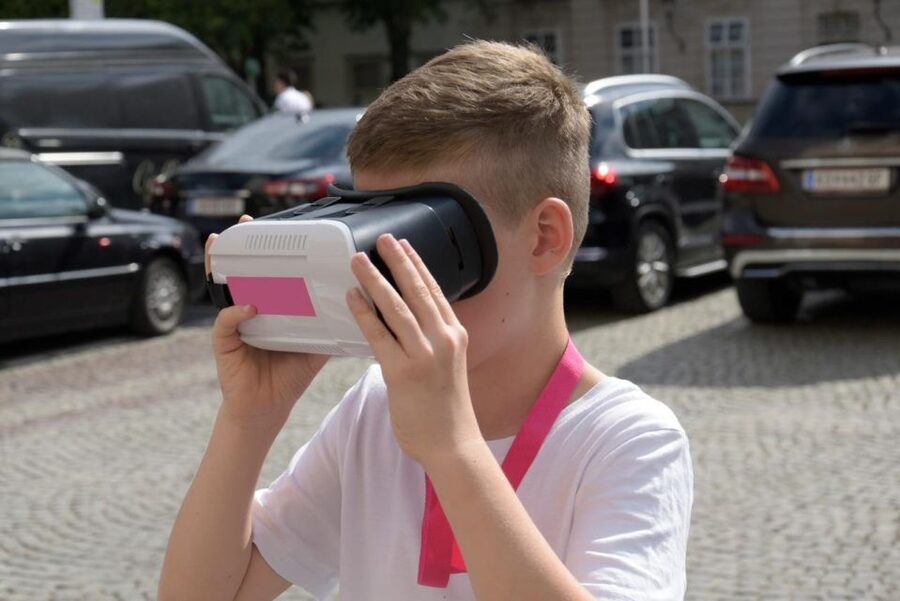
The tour starts by bringing Mirabell Palace and Square into the narrative. Even if you’ve only passed by Mirabellplatz, it’s a smart choice because it gives you a recognizable landmark to anchor the “before/after” feeling.
In tours like this, the best use of a famous location is the contrast. You already know modern Salzburg. Then the VR layer gives you a reason to look again—angles, layout, and how public space can shift in meaning over time. When the narration hits well, you’ll understand how the same square can tell different stories depending on the era.
One practical point: because the tour is relatively short, this opening section sets the tone. If you’re hoping for the kind of deep, architectural talk you might get on a long guided walk, remember this is still a VR-led concept. You’ll get stories, but they will be tied to the visuals on the phone-and-glasses setup.
Markart Square’s Old Wood Market (About 120 Years Ago)
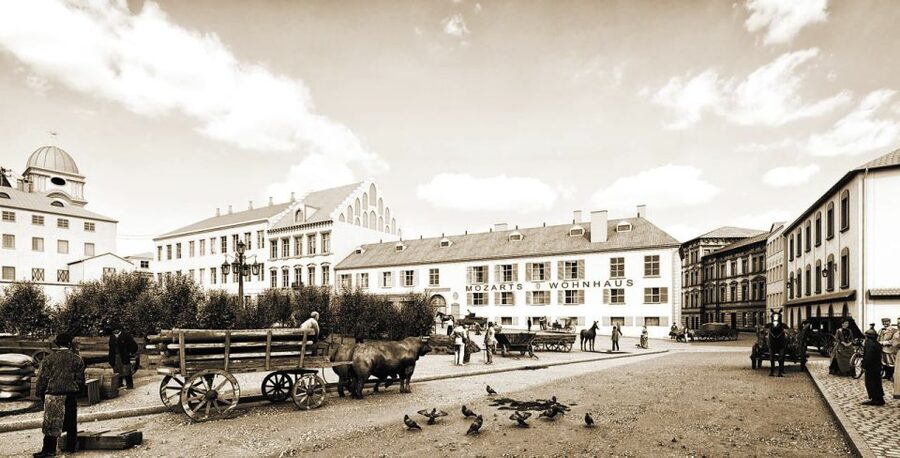
Next is Markart Square, including a look at the old city wood market about 120 years ago. This is one of the most interesting stops because it points at everyday economics, not just big events. Markets are how you see a city’s routine. They also show how people used space for work and movement.
A wood market is a great theme for a VR tour because it invites questions you’d usually have to research yourself: How did goods move through the streets? What did the square feel like at that time? What kinds of structures and activity surrounded normal life?
This is also where the guide’s ability to frame what you’re seeing becomes important. One criticism of the tour concept is that people want more context about what you’re looking at—especially about older buildings and the life of ordinary residents. If you fall into the category that loves specific background (names, functions, how people lived), you might find yourself wishing for more spoken detail during this section.
Still, as a quick way to turn a modern square into a “then” scene, it works nicely—especially if you’re new to Salzburg or you want a fast mental map of the city’s layers.




Pfeifergasse in World War II Mode

The most serious and memorable content is the WWII-era scenery in Pfeifergasse. If you only remember one historical tone from the tour, this is it.
World War II scenes change how you look at a place immediately. Streets and alleys that you’d normally treat as transit routes become something more charged: a reminder that cities are not frozen. They change because history forces them to.
Because the tour is built around VR visuals, you’ll likely get a more direct, immediate sense of the atmosphere than you would from a simple talk. But be honest with yourself about what you want. If you’re looking for a gentle history lesson, this is not the mellow section. If you’re specifically interested in how Salzburg’s physical spaces might have looked during the war, this stop is the reason to book.
The Live Guide: What Sabine Rath Adds to the 3D Scenes

The tour guide is Sabine Rath. The live component is not an afterthought here—it’s a core part of what you’re paying for.
In the strongest moments, a guide helps you do two things:
- Focus your attention on what the VR scene is showing (not just what looks cool).
- Convert a picture into meaning by connecting it to Salzburg’s past.
When the storytelling clicks, the 3D experience feels like you’re standing inside the timeline, because the narration gives you the “so what.” That’s also why language matters. The tour is in German, so if you can understand the guide well, you’ll squeeze more value out of every scene.
That said, there’s also a mismatch risk. Some people found the historical information to be light compared to the price, and felt the tour leaned too heavily on a small set of images. If you want lots of historical detail on buildings, daily life, and deeper context beyond what’s shown on-screen, plan to supplement with other reading or another walking tour.
Price and Value: $32 for VR Glasses, TimeTour, and a Guided Walk

At $32 per person for about 90 minutes, you’re paying for a specific package:
- VR glasses provided
- No entrance fees
- A guided walk with historical stories
- TimeTour app-based setup on your phone
You’re not paying for food, and you also need to bring the smartphone yourself (not included). That smartphone requirement is not just a technical detail; it affects your experience quality. If your phone is low on battery, has trouble with the app, or you’re slow to switch between steps, you lose time—and VR tours lose their magic fast when you’re distracted.
Value also depends on expectations about how much content you’ll see. The concept is presented as a virtual reality journey through Salzburg’s past with 3D scenes tied to multiple locations and eras. But if your personal standard for VR is constant movement and lots of interactive moments, you might feel shortchanged. One theme in the feedback is that some people expected more than a small set of 3D visuals and felt the tour was expensive for what was shown.
On the other hand, if you treat this as a guided sampler—a fast, visual way to connect Salzburg’s landmarks to its past—it can be a good buy. It’s also a nice option when you want something different from the typical museum-and-cathedral rhythm, and you have limited time.
Practical Tips So the VR Experience Doesn’t Feel Like a Tech Problem

If you want this to feel like history on your terms, manage the setup early.
- Download TimeTour in advance and test that it opens correctly.
- Bring a charged smartphone. VR tours are the last place you want a dying battery.
- Arrive on time at Mirabellplatz, so you’re not flustered while the tour starts.
- Listen carefully at the beginning when the guide explains how the glasses and app work together. A lot of the experience depends on that first handoff.
Also, set your expectation about what you’ll do with the phone and glasses. The experience is described as VR glasses bringing you into different epochs of Salzburg’s history, but some people felt the visuals were limited. Translation: if you’re hoping that you’ll be fully “in VR” the entire time like a blockbuster game, you might need to lower that bar and treat it more like guided VR storytelling.
Finally, think about comfort. The tour does involve VR glasses, so if you’re sensitive to that kind of viewing, plan accordingly. There’s no specific comfort disclaimer provided with the tour details, so your own comfort level is your best guide.
Who Should Book This Tour (and Who Might Prefer Something Else)
This tour fits best if you’re:
- A first-time visitor to Salzburg who wants a fast way to understand how the city evolved
- Someone who likes place-based storytelling—seeing history tied to real squares and streets
- You enjoy VR as a tool, not as the main goal
It may be less satisfying if you’re:
- A history detail hunter who wants long explanations about buildings and daily life beyond what you see on the VR scenes
- Someone who expects a large number of VR moments or a highly interactive experience for the whole time
- Traveling without a smartphone you can use for the TimeTour app
Good to know for planning: it’s not suitable for children under 6, and it is wheelchair accessible. The guide is German-only, so if you need a different language, you should check before you book.
Should You Book the 3D Salzburg VR Tour?
If you want a quick, guided way to connect Salzburg’s landmarks to its past—especially the WWII look in Pfeifergasse—this is a strong contender. The Mirabellplatz start and the specific stops (Markart Square’s old wood market and the wartime street scenes) give you enough structure that the VR doesn’t feel random.
But book with clear expectations. This is VR storytelling with a set list of historical scenes, not a limitless exploration experience. If you’re expecting tons of deep historical detail or a constant immersive VR environment, you may feel disappointed for the price. If you’re open to a guided overview and you’ll bring a working, charged smartphone, you’ll likely enjoy the novelty—and the chance to look at Salzburg with a new timeline in mind.
FAQ
Where does the tour start?
You meet at Mirabellplatz 5, 5020 Salzburg, in front of St. Andrä Church.
How long is the 3D Salzburg VR tour?
The duration is about 90 minutes (around 1.5 hours).
What does the tour cost?
The price is $32 per person.
What language is the live guide?
The live guide speaks German.
Do I need a smartphone?
Yes. You need your own smartphone and you should download the TimeTour app before joining.
Are VR glasses provided?
Yes. VR glasses are provided by the tour.
Is food included?
No. Food and drinks are not included.
Are entrance fees included?
Yes. No entrance fees are required for this tour.
Is the tour wheelchair accessible?
Yes. The tour is listed as wheelchair accessible.
Is the tour suitable for young children?
It is not suitable for children under 6 years.
Do I need to do anything before I arrive?
Bring a charged smartphone and make sure the TimeTour app is downloaded in advance. You’ll receive the password and glasses when the tour starts.
More Tour Reviews in Salzburg
- The Original Sound of Music Tour in Salzburg
★ 4.5 · 6,129 reviews - Salzburg: Original Sound of Music Tour
★ 4.8 · 5,059 reviews - From Salzburg: Half-Day Tour to Hallstatt
★ 4.6 · 3,596 reviews - Salzburg: Mozart Concert at Mirabell Palace
★ 4.8 · 3,498 reviews - Salzburg: Hohensalzburg Fortress Admission Ticket
★ 4.6 · 2,236 reviews
Solve the City: More Trails
- Salzburg: Cathedral Entry Ticket with Audio Guide Option
★ 4.4 · 134 reviews - Escape game in Salzburg
★ 4.5 · 23 reviews - Kickbike Tour – discovering the city in a fun and active way
★ 5.0 · 21 reviews - Salzburg Sound of Music Quest: Self-Guided Escape Game
★ 3.5 · 10 reviews - Self-Guided Tour of Salzburg: Stories, Photo Spots & Desserts
★ 4.5 · 9 reviews
Fresh from Salzburg: Latest Reviews




Escape Games & Self-Guided Trails, compared.
 ★ 4.4Cathedral Entry Ticket with Audio Guide OptionFrom $5134 reviews
 ★ 4.5Escape game in SalzburgFrom $9023 reviews
 ★ 5.0Kickbike Tour – discovering the city in a fun and active wayFrom $4221 reviews
 ★ 3.5Salzburg Sound of Music Quest: Self-Guided Escape GameFrom $710 reviews
 ★ 4.5Self-Guided Tour of Salzburg: Stories, Photo Spots & DessertsFrom $369 reviews
 ★ 4.0Mozart’s Salzburg Exploration Game and TourFrom $78 reviews
Browse the lists this tour appears in